Home / Destinations / Religious / Buddhism /
Lovamahapaya
Last updated on 22 Jun 2023Show location
Lovamahapaya, also known as the Brazen Palace, is a significant historical site located within the sacred city of Anuradhapura in Sri Lanka. This ancient edifice, with its imposing architectural grandeur, stands as a testament to the rich cultural and architectural heritage of the country. Once a magnificent structure, Lovamahapaya holds a special place in Sri Lanka's history and continues to captivate visitors with its historical significance and architectural beauty.
Lovamahapaya was originally constructed during the reign of King Dutugemunu in the 2nd century BCE. It was designed as a nine-story building and served as a residence for the monks of the Mahavihara Monastery. The name "Brazen Palace" was derived from the fact that the building was adorned with bronze tiles that shimmered in the sunlight, adding to its splendor. The palace complex covered a vast area, measuring 400 feet (122 meters) in length and 250 feet (76 meters) in breadth. The structure consisted of 1,600 stone columns, arranged in rows, supporting the upper levels. The design of Lovamahapaya incorporated a fusion of architectural styles, drawing inspiration from Indian, Persian, and Greek influences.
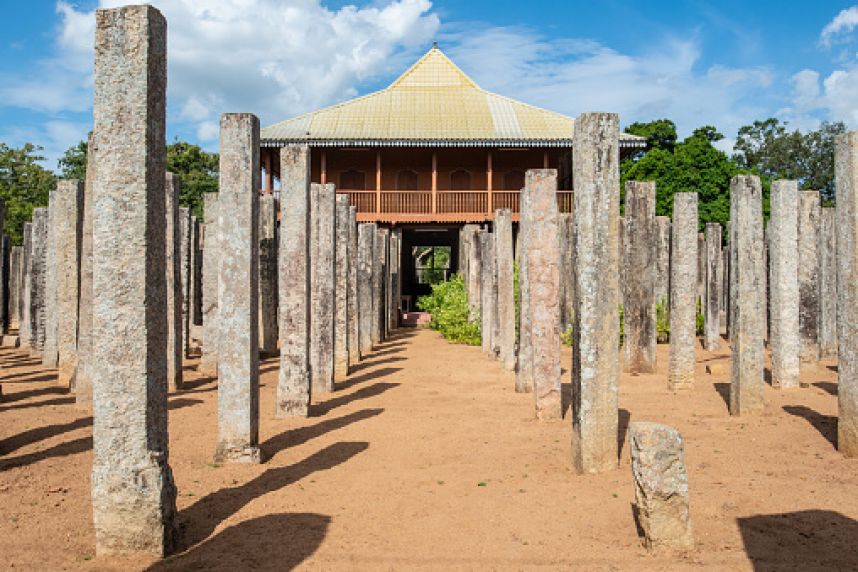

One of the most distinguishing features of Lovamahapaya was its unique roof, which was made of bronze tiles. These tiles, meticulously crafted and polished, contributed to the grandeur of the palace. Unfortunately, over the centuries, the bronze tiles were plundered, and the structure fell into disrepair. Today, the palace remains as a partial restoration, with only the stone columns standing as a testament to its former glory. Despite its current state, Lovamahapaya continues to evoke a sense of awe and admiration among visitors. The sheer scale and architectural intricacy of the remaining stone columns provide a glimpse into the past, showcasing the advanced engineering and craftsmanship of ancient Sri Lankan builders. The significance of Lovamahapaya extends beyond its architectural brilliance. The palace played a crucial role in the religious and social life of ancient Sri Lanka. It served as a center for monastic activities and intellectual discourse, housing thousands of monks who resided within its walls. The palace complex was a hub for Buddhist learning and served as a platform for the spread of Buddhist teachings and philosophy. Lovamahapaya also held religious relics and sacred objects of worship, making it a revered pilgrimage site for devotees. The grandeur of the palace and its association with Buddhism attracted pilgrims from far and wide, seeking spiritual enlightenment and divine blessings. Even today, the ruins of Lovamahapaya continue to draw devotees and tourists who are fascinated by its historical and religious significance. The restoration and preservation efforts undertaken by the Sri Lankan government and archaeological authorities have ensured that Lovamahapaya remains accessible to visitors. The site has been designated as a UNESCO World Heritage Site, recognizing its cultural and historical importance. Visitors can explore the palace complex, marvel at the remaining stone columns, and imagine the splendor that once graced the site. In conclusion, Lovamahapaya stands as a poignant reminder of Sri Lanka's glorious past and architectural prowess. Despite its current state of ruin, the palace continues to inspire awe and fascination among visitors. As a cultural and historical treasure, Lovamahapaya serves as a testament to the rich heritage of Sri Lanka and its enduring connection with Buddhism. Exploring the remnants of Lovamahapaya is a journey back in time, allowing visitors to appreciate the architectural genius and spiritual significance associated with this ancient palace.