Home / Destinations / Historical / Ruins /
Lovamahapaya
Last updated on 23 Jun 2023Show location
Lovamahapaya, also known as the Brazen Palace, is an ancient architectural marvel located in the sacred city of Anuradhapura, Sri Lanka. Built during the reign of King Dutugemunu in the 2nd century BCE, Lovamahapaya was a grand structure that served as a Buddhist monastery and a place of gathering for Buddhist monks. It stands as a testament to the architectural prowess and religious significance of ancient Sri Lanka, attracting visitors from around the world.
The history of Lovamahapaya dates back over two thousand years. King Dutugemunu, known for his efforts to unify Sri Lanka and restore Buddhism, commissioned the construction of the Brazen Palace. The massive structure was originally nine stories high, with over a thousand rooms and a thousand windows. It was adorned with bronze tiles, hence the name "Brazen Palace." The architectural style of Lovamahapaya was unique for its time. It featured a combination of Indian and Sri Lankan architectural elements, blending influences from the Mauryan and Sinhalese traditions. The structure was supported by massive stone pillars, each intricately carved with decorative motifs. The walls of the palace were adorned with sculptures and murals, depicting scenes from Buddhist stories and teachings.
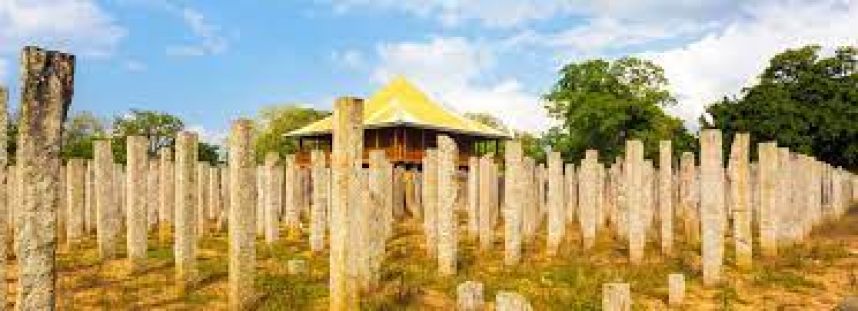

Lovamahapaya played a vital role in ancient Sri Lanka as a center for Buddhist monasticism. It provided accommodation for thousands of Buddhist monks and served as a hub for religious activities and intellectual discourse. The palace complex included lecture halls, libraries, meditation chambers, and other facilities essential for the monastic life. In addition to its religious significance, Lovamahapaya was also a center for social and cultural activities. It hosted grand ceremonies, processions, and festivals, attracting devotees and visitors from far and wide. The palace became a symbol of royal patronage and the flourishing Buddhist civilization in ancient Sri Lanka. Unfortunately, over the centuries, Lovamahapaya fell into a state of ruin. The palace was destroyed by foreign invasions, natural disasters, and the passage of time. Today, only the remains of the original structure can be seen, with some sections reconstructed to give visitors a glimpse into its former grandeur. Despite its dilapidated state, Lovamahapaya continues to hold immense cultural and historical significance. It is a UNESCO World Heritage Site and a cherished symbol of Sri Lanka's ancient civilization. The site attracts historians, archaeologists, and tourists interested in exploring the rich heritage of the country. Visiting Lovamahapaya provides a unique opportunity to witness the grandeur of ancient Sri Lankan architecture and gain insights into the country's Buddhist history. The vastness of the palace complex and the intricate carvings on the stone pillars offer a glimpse into the architectural prowess and artistic mastery of ancient craftsmen. Adjacent to Lovamahapaya, the sacred Sri Maha Bodhi tree, believed to be the oldest recorded tree in the world, stands as a spiritual companion. The presence of the Bodhi tree adds to the sanctity and serenity of the surroundings, creating a profound spiritual atmosphere for visitors. In conclusion, Lovamahapaya, or the Brazen Palace, stands as a testament to the architectural brilliance and religious significance of ancient Sri Lanka. Although now in ruins, it continues to captivate visitors with its historical and cultural allure. The palace remains a cherished site, representing the rich Buddhist heritage and the grandeur of the ancient civilization that once flourished in Anuradhapura. A visit to Lovamahapaya allows one to appreciate the architectural marvels of the past and to connect with the spiritual essence of ancient Sri Lanka.