Home / Destinations / Nature / Mountians /
Dimbulagala Mountain
Last updated on 17 Apr 2023Show location
The lovely hilly Dimbulagala range is located about twelve miles to the east of the historic kingdom Polonnaruwa on the east side of the Mahaveli. This range is referred to as Udumbara-giri in our old Pali literature. Wood apples are referred to as "Udumbara," while "giri" refers to hills or mountains. Dola Pabbatha was another name for Dimbulagala.
This region was formerly referred to as a kingdom of the Vakshas, a prince's war-savvy realm, a sacred place, and a Maha Viharaya—the home of several sacred entities. After the Polonnaruwa Kingdom was overthrown, this area was occupied by dense forests without any inhabitants. However, it is back up as a renowned residence for many of our monks and aspiring monks, who would be our future pupils of His Buddha or preachers of his teachings. It is stated that Prince Pandukabahaya, the son of Unmadachitra and Deegagamini, dwelt in this stone cave with Swarnapali centuries ago. The two demon Senadhipathies Chitra Raja and Kala Vela, who were demons in human form, showed them tremendous hospitality. After some time had passed, Princess Swarnapali gave birth to a son in the same stone cave of Dimbulagala. He was given the name Mutasiva in honor of her father. It is also mentioned that Ganatissa, another Prince, was born. Before ascending to the throne and making Anuradhapura his home, Prince Pandukabahaya resided here for a considerable period of time. After him was Mutasiva, the king he had with Swarnapali. According to legend, Arahat Mahinda came to the island around BC 247, during his rule. After Mutasiva came his son, the illustrious King Devanampiyatissa. From all of this, it is obvious how crucial Dimbulagala is to us in reconstructing the lives of our ancient monarchs and their perseverance despite adversity. Several Viharas were built by King Devanampiyatissa, the first monarch of Anuradhapura and the founder of our first kingdom. Dimbulagala was one of the first such Viharas. Also, it is significant historically since several famous Arahats lived at Dimbulagala from the reign of Arahat Mahinda up until the time of the final Arahat, Maliyadeva. The renowned literary work "Saddharmalankaraya" makes reference to this. Then there were times of political instability and unrest that threatened general administration and security. Consequently, starting in the first century and continuing until the twentieth, we observe history repeating itself. When Vijayabahu I came to power in the second century (1057 BC), Buddhist temples were restored and rebuilt. The king himself underwent his Coronation/Crowning with the blessings of the Sangha, swearing to protect Buddhism. Vijayabahu, I rebuilt the Dimbulagala Viharaya after it had been destroyed by invaders and adversaries.
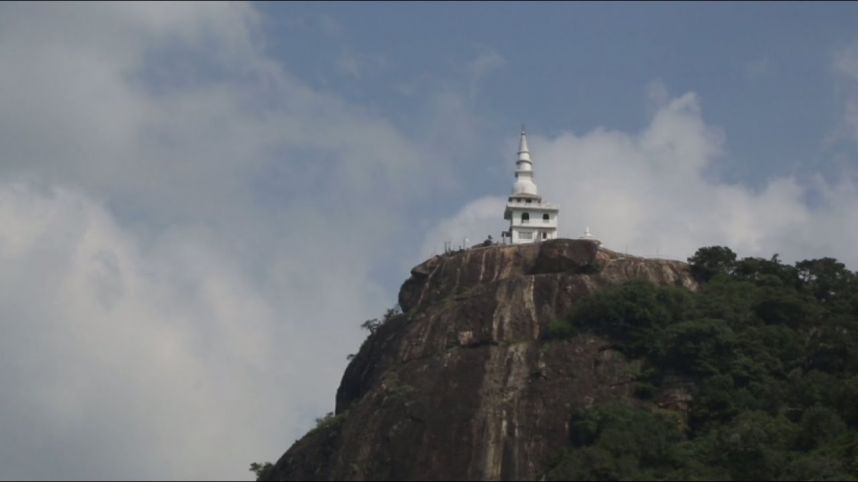

Another noteworthy fact about Dimbulagala is that Kuththagaththatissa, an Arahat who attended the writing down of the text at Aluvihare Matale alongside 500 Bhikkus, was made to live there. After learning of this, King Valagamba supported Dimbulagala by maintaining the caves, building Viharas for the monks, and offering the Bhikkus land, fields, and villages. He also constructed flower ponds, fruit gardens, and flower gardens. Sundara Devi, the queen of Vijayabahu I, was an Indian but had done much good by starting various companies located on Dimbulagala. Around the Oushada Pokuna, or herbs pond, numerous meditation kuti/caves were constructed. Moreover, connections had been made with Anoratha, the reigning monarch of Burma. Numerous Dhamma books were sent to Burma, and the King of Sri Lanka was also requested to send many more Tripitaka books. Following Vijayabahu I, Buddhism had another setback due to a lack of royal support. Parakramabahu I assumed the throne at a period when the Sangha as a whole was divided, and as a result of the services he provided, he earned the nickname Parakramabahu the Great. The only thing that could have prevented further decline in the Bhikkhu Vinaya was the presence of Viharadhipathi of Dimbulagala. To enforce order within the Sangha, the King called a Vinaya Sangayana. The Viharadhipathi organized a Sangha Sabha for this reason. The Vinaya/Discipline of the Sangha was the focus of the Sangha Sabha, which was established during the reign of King Parakumbha. Under Maha Kassapa as the Chief Priest, Dimbulagala attained a reputation as a hub of knowledge on a global scale. It also gained notoriety as a Buddhist center and a kingly advisory center. Many monks from Burma and other countries who came to study in this area lived at Namal Pokuna. When Parakramabahu I and Matara Kithalagama reconstructed Dimbulagala after it had been attacked by enemies and turned into a desolate wilderness, they gave the surrounding land to the Viharaya. The Sangha Nayaka revered Dimbulagala and guarded the Viharaya until his passing a few years ago. Throughout the last 20 years, the late Maha Nayaka provided land, housing facilities, and direction to construct village communities in the region. His intentions to establish settlements in Kantale and Vavuniya were unsuccessful, but he supported and encouraged those in Welioya, Janakapura, Welikanda, and Kadawatha. All heads of state supported him in some of his national endeavors, and the late Gamini Dissanayake gave him strength, particularly in the villages in the Mahaweli Development area. With the passion and dedication of the late Maha Nayaka and the discovery of Udumbara-giri, which had evolved into the abode of the Veddhas, Dimbulagala, which had deteriorated after the Parakramabahu era, saw a renaissance. Most Rev. Siri Seelalankara committed his life to improving the historical region after settling among the Veddhas. He made an effort to put aside small-scale intercommunal animosities and rebuild Dimbulagala as a historically significant city and a center of worship for both laypeople and clergy. Dimbulagala, which was previously a renowned center of study, shared religious ties with Thailand and Burma. It had delivered sermons in 18 different languages. Great kings like King Vijayabahu I and King Parakramabahu I received wisdom and guidance from it. The construction of Dimbulagala has received the support of royal queens like Sundara Devi. The great clergy who lived in Dimbulagala gave the great writers guidance, including Gurulugomi and Vidyachakravarthi. There is a theory that a gold-engraved book on the Tripitakaya, penned by a Thai prince and kept in a museum in Thailand, has something to do with the end of hostilities in Thailand thanks to the intervention of the monks in Dimbulagala.