Home / Destinations / Heritage / Natural /
Cave Temple of the Dambulla
Last updated on 27 Apr 2023Show location
The Dambulla Cave Temple is situated on a massive rock rising 1118 feet from the sea level, which is 600 feet high and over 2000 feet in length. The temple is home to the world's most celebrated cave complex of Buddha images and rock paintings. The site is culturally significant and was added to the list of UNESCO World Heritage Sites in Sri Lanka.
The temple was initially constructed during the reign of King Vattagamini Abhaya, also known as King Valagamba. During a South Indian invasion, the king abandoned his Anuradhapura Kingdom and hid in the caves for 12 years. After regaining the kingdom of Anuradhapura and becoming the king, he converted the caves into Buddhist temples. He constructed walled partitions and drip ledges to make the caves suitable for rainy weather. He built three cave temples named Devarajalena, Maharajalena, and Paccimalena. After King Vattagamini Abaya's reign, the cave temple did not come under the patronage of any other kings until Vijayabahu I, who made Polonnaruwa his kingdom. He renovated the cave temples, and it is believed that Buddhist monks dwelled in this and nearby caves during those times. Other kings who contributed to the temple's upliftment were King Keerthi Sri Nissankamalla, King Buwanekabahu, King Vickramabahu III, King Rajasinha I, and King Vimaladharmasuriya I at various times.
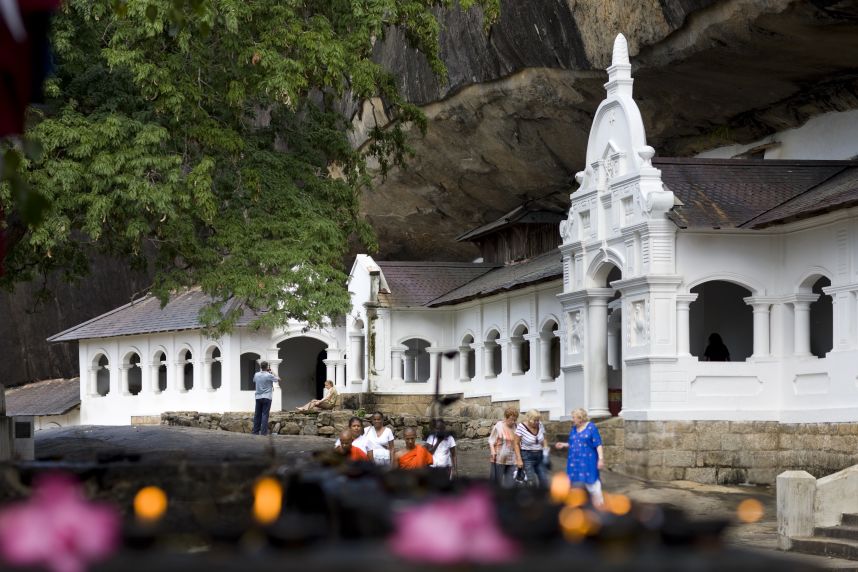

Archeologists state that this cave and numerous other caves around the main rock were used for dwelling in prehistoric times. The first Dambulla Cave Temple is called Devarajalena Vihara, which houses a giant sleeping postured Buddha statue, said to be the Parinirvana status of Lord Buddha. A statue of Venerable Ananda, Lord Buddha's devoted disciple, is found near the feet of the Buddha statue. The God Vishnu image is believed to have been constructed during King Vatta Gamini Abhaya's reign, which gave the cave its name. The present names of the cave temples are said to belong to a period later than the initial temple construction times. The Buddha images are suggested to belong to a period later than the second century BC, and the paintings date back to the 17th and 18th centuries. The paintings in the caves are faded due to the lighting of oil lamps and incense by the worshippers of earlier times.